Engineering
Move fast, build big
Building platforms that move at the speed of live.
Our engineering teams build the infrastructure that powers high-traffic, real-time digital platforms. From live streaming and interactive experiences to secure transactions and data systems, we design and operate technology that performs reliably at scale.
We work across distributed systems, media delivery, and high-performance services to ensure fast, stable, and resilient products. Engineers here take ownership of complex problems, collaborate closely with product and design, and build systems that support millions of users around the world.

Real Time Systems
We build infrastructure that processes events instantly — powering live interactions, gameplay, and streaming without delay.

Platform Scale
Our systems are designed to handle millions of users and transactions while maintaining speed and stability.

Data Platforms
Our data pipelines transform massive streams of activity into insights that drive product decisions and user experiences.

Performance Engineering
We optimize every layer of the stack to ensure fast, responsive experiences for players and viewers worldwide.
Surviving the growth
Rebuilding our data platform from the ground up.
When Stake and Kick started scaling at a pace that made legacy infrastructure sweat, we didn't patch things up. We redesigned everything.
- Data ingested: 130 GB/day
- Growth rate: 4 TB/month
- Markets served: 5+ regions
Our old stack was creaking. DMS failures were causing data latency downstream, Redshift was choking on concurrent reads and writes, and S3 was only ever used for staging. There was no real data lake, no governance, and no room to grow into new jurisdictions without the whole thing falling over.
So we replaced the old architecture with a modern multi-region lakehouse. Data now flows through Kinesis Data Streams into a medallion data lake (Bronze, Silver, Gold) built on Apache Iceberg tables, processed by AWS Glue, orchestrated by MWAA, and catalogued in real time. Redshift handles analytical workloads via a clean producer/consumer data share model, with Amazon SageMaker plugged in for the AI/ML layer.
The result scales with us. Teams work independently on modular pipelines. Data governance is built in, not bolted on. And when we expand to a new market, the architecture is ready for it before we are.

Scale without the spiral
Building infrastructure that scales itself.
When you're growing at Easygo speed, manual infrastructure management stops working fast. With heaps of clusters a bunch of teams, and a lot of drift, we built something better.
The platform sits between our engineers and AWS. Developers describe what their application needs and the platform works out where and how to run it. No handholding, config archaeology, or 3am YAML disasters.
The foundation is two ideas working together. Deployment archetypes give every application a smart starting point based on what it actually needs, fast, high-load, or cost-efficient. Not a blank slate or a pile of parts.
GitOps keeps everything honest. Git is the source of truth. Clusters sync themselves. Drift gets corrected automatically.
The result: spin up a new cluster and get a fully configured, production-ready environment in minutes. Testing environment, disaster recovery, new region, it doesn't matter. Five clusters or five hundred, the effort stays flat.
Developers focus on shipping. Platform engineers focus on building. Nobody's drowning in infrastructure tickets. Cloud is complicated. Teams get swamped. Platforms help. Ours is built to prove it.

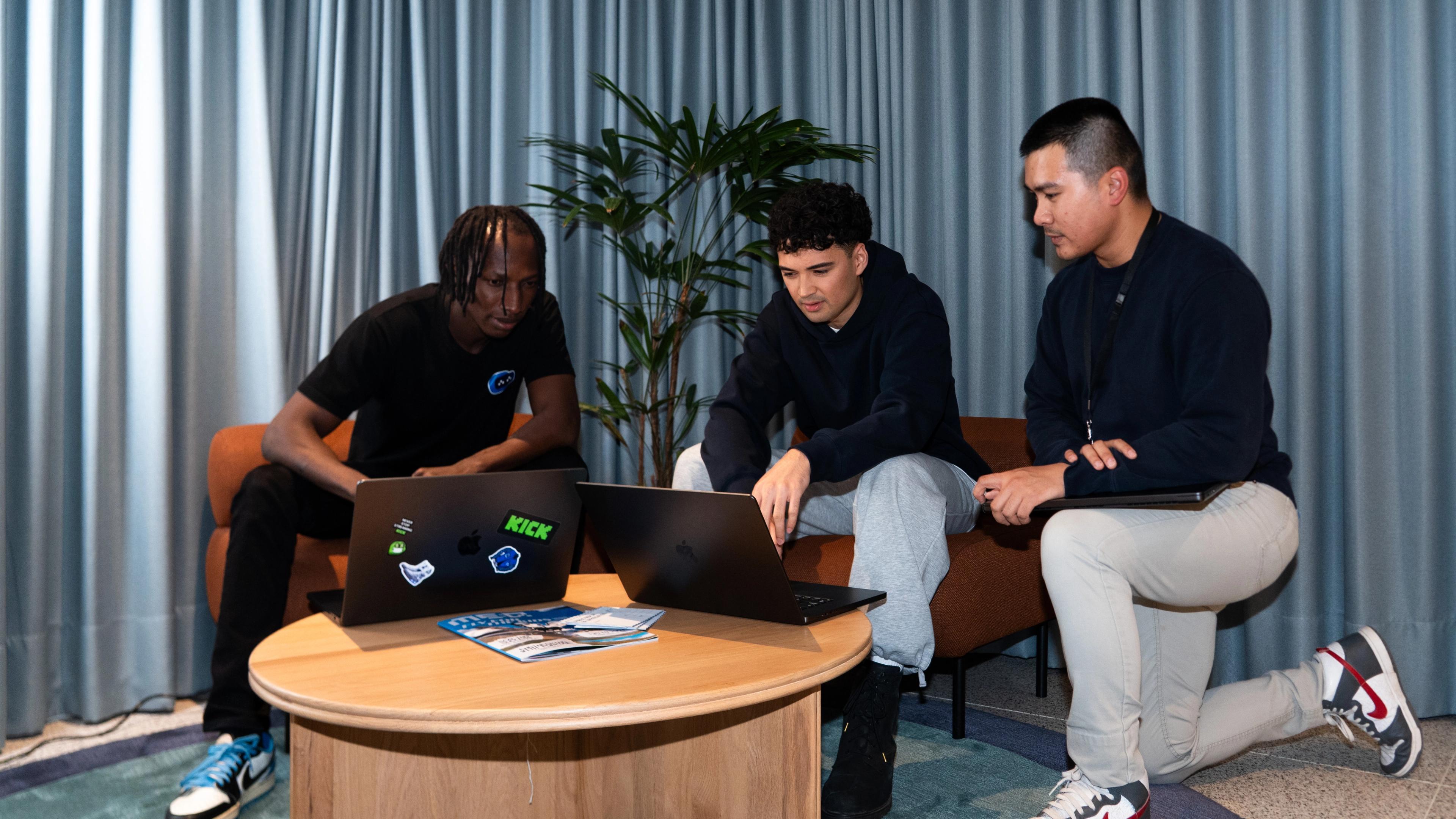
Hear from the team
“I've never had so much fun working in a company before. I get to own my career path, make important decisions, and take ownership of what I do. I feel challenged, trusted, valued, and rewarded.”
Daniel, Software Engineer
“The data space is growing fast, with big opportunities in data governance, AI agents, and ML infrastructure. At Easygo, data has high visibility and impact, and we're expanding our engineering squads to match that potential.”
Carine, Engineering Manager
“I've never had so much fun working in a company before. I get to own my career path, make important decisions, and take ownership of what I do. I feel challenged, trusted, valued, and rewarded.”
Daniel, Software Engineer
“The data space is growing fast, with big opportunities in data governance, AI agents, and ML infrastructure. At Easygo, data has high visibility and impact, and we're expanding our engineering squads to match that potential.”
Carine, Engineering Manager


Engineering team FAQ
What we look for and how we hire
Learn what it takes to land a role within our Engineering team.
Expertise
Both, and we think that's a strength. Generalists who love hard problems across Software Engineering, and specialists across Data, Analytics, Machine Learning, AI and Video Streaming.
For now, yes. We're building complex products at serious scale and we need people who can contribute from day one.
Culture
Technical depth, sharp problem-solving, and the ability to move fast without cutting corners. We're edgy but humble, fast but thoughtful. If that sounds like your operating system, we'll get along.
Adaptability, comfort with ambiguity, strong collaboration, and deep technical knowledge. We put as much weight on how someone works as what they can build, which is rarer in the industry than it should be.
Engineers who work in silos, resist change, or shy away from moving fast. This is a collaborative environment that moves quickly, and the people who do best here lean into that rather than fight it.
Application process
You'll start with a conversation with our Talent team, move through one to two technical challenges built around the role, then finish with a behavioural interview tied to our values. You'll always know where you stand.
For some specialist roles, yes. Most of the time the technical challenges happen live alongside one of our engineers. We'd rather see how you think in the moment than how you perform with a week to polish it.
Work closely with your Talent Partner to understand what each technical round involves, as the requirements vary by role. Expect a mix of pair programming focused on algorithms and data structures, and a system design interview in your area of expertise. Every candidate also goes through our loop interview, which assesses behaviours and cultural alignment through technical problems.
Related Articles




Open Engineering roles
Turn bold ideas into real impact
Want to join the crew? Check out our current job listings.
Software Engineering Manager - Wallet Tribe (Crypto & Fiat)Lead multiple engineering teams at Easygo, mentoring tech leads and driving delivery excellence. Shape scalable, cloud-native systems on AWS, Kubernetes and TypeScript while fostering a culture of growth, innovation, and continuous learning.
Melbourne
ViewSenior Software Engineer (Backend)Easygo job template - engineering (Will need to update to either kick/stake in brand) Confirm employment type.
Melbourne, Victoria
ViewSenior Software Engineer, Full-Stack (Sydney)Join our growing Sydney engineering team, working across meaningful product and platform challenges. Strong technical skills and a collaborative mindset are valued in a team focused on quality, velocity, and deep ownership of outcomes.
Sydney, Australia
ViewStaff Software Engineer - Compliance teamLead technical direction for Easygo's Compliance team, shaping the systems and architecture behind our Global expansion. Influence the product roadmap and mentor engineers on a high-traffic, real-time platform at scale.
Sydney, Australia
View